Hungry Ghost Festival 2026
Dates, Meaning, Rituals, Taboos & Spiritual Protection
The Hungry Ghost Festival is one of the most important traditional observances in Chinese culture and is widely celebrated throughout Malaysia, Singapore and many parts of Asia. It takes place during the seventh lunar month, commonly known as Hungry Ghost Month, when it is believed that the gates separating the spiritual and human worlds temporarily open.
During this period, ancestors are thought to return to visit their families, while wandering spirits who have no descendants to remember them also roam the earth in search of food, prayers and offerings. The festival is therefore not only about showing respect to one’s ancestors, but also about extending compassion to forgotten souls who might otherwise continue to suffer.
At its heart, Hungry Ghost Month is a time of remembrance, generosity and spiritual merit.
Important Dates in 2026
In 2026, the Hungry Ghost Festival falls on Thursday, 27 August, the fifteenth day of the seventh lunar month, when the month’s spiritual energies are believed to be at their strongest.
Three dates are especially significant:
- 13 August 2026 – The first day of the Seventh Lunar Month, when the gates of the spirit world open.
- 27 August 2026 – Hungry Ghost Festival, the fifteenth day of the month and the Full Moon.
- 10 September 2026 – The final day of the Seventh Lunar Month, when the spirits return to the spiritual realm and the gates close.
Honouring Ancestors & Wandering Spirits
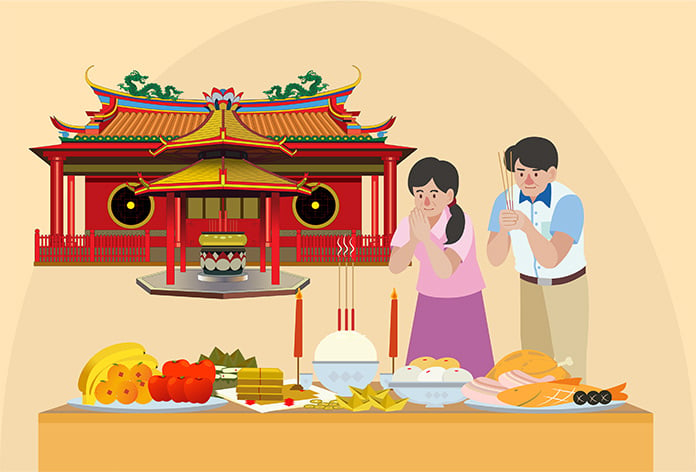
The first day of the 7th lunar month begins with families preparing an ancestral altar. Ancestral tablets or photographs of departed loved ones are placed on the altar with offerings of home-cooked food, fruit, tea, incense and candles. “Hell Notes” are commonly burnt in a red metal container as symbolic offerings, representing money for loved ones during their visit to the human world.
As evening approaches, families also make offerings outdoors for wandering spirits who have no descendants to care for them. Food, incense and sometimes Hell Notes are offered to these forgotten souls as acts of compassion, appeasing them and encouraging them to continue their journey peacefully without disturbing the living.
These outdoor offerings are often repeated throughout Hungry Ghost Month.
The Peak of Hungry Ghost Month
The 15th day of the seventh lunar month marks the climax of Hungry Ghost Month. Falling on the Full Moon, it is also associated with the descent of the Earth Official (Di Guan Da Di), one of the Three Heavenly Officials in Taoist tradition, who is believed to examine the deeds of mankind, grant pardons and relieve the suffering of wandering spirits.
Many temples hold elaborate ceremonies on this day. Large offerings are made to both ancestors and wandering spirits, accompanied by incense, chanting and the burning of symbolic paper offerings representing money, clothing, houses and other necessities for use in the spirit world.
Traditional Chinese opera, musical performances and entertainment are also commonly held. These performances are not merely for the living – they are regarded as offerings intended to bring comfort and enjoyment to the visiting spirits.
Saying Farewell to the Spirits
On the final day of Hungry Ghost Month, families perform a simple farewell ritual before midnight, when the gates of the spirit world are believed to close once again.Food offerings are placed by the roadside in the late afternoon, together with incense and symbolic offerings to provide the spirits with provisions for their return journey to the spiritual realm.
Chanting During Hungry Ghost Month
Throughout the month – and especially on the three important dates – many Buddhists recite the Ksiddigarbha Sutra and chant Ksiddigarbha’s mantra to dedicate merit to departed loved ones and wandering spirits. Ksiddigarbha is revered as the Bodhisattva who vows to help beings suffering in the lower realms. His practices are believed to relieve suffering, accumulate merit and assist spirits in finding a better rebirth or progressing towards enlightenment.
His mantra may be recited in Sanskrit, Tibetan or Chinese, with each version carrying the same intention and merit.
Sanskrit
Om Pramardane Svaha
Tibetan
Om Pa La Ma Ni Da Xha Hong Pa Suo Ha
Chinese (Pinyin)
ŌngBō Luò Mò Lín TuóNíng Suō PóHē
(嗡钵啰末邻陀宁娑婆诃)
Choosing the Right Incense
Incense forms an important part of Hungry Ghost Month rituals. The three most commonly used are:
- Sandalwood – for its calming fragrance and believed to soothe restless spirits.
- Frankincense – valued for its purifying and uplifting aroma.
- Agarwood – regarded as the highest grade of incense and used when making offerings to high celestial beings such as the Earth Official, or when invoking Ksiddigarbha.

Hungry Ghost Month Taboos
Because Hungry Ghost Month is regarded as a time when spiritual activity increases, many Chinese families observe certain taboos to avoid attracting unwanted attention. While customs vary between regions and families, the following are among the most widely observed:

- Do not hang wet clothes outdoors overnight.
- Avoid leaning against walls or standing in dark corners.
- Avoid staying out late at night unnecessarily.
- Do not swim after dark.
- Avoid unnecessary visits to hospitals.
- Do not stand beneath large trees at night.
- Do not respond immediately if someone calls your name late at night.
- Avoid tapping people on the head or shoulders.
- Do not pick up red packets, money or coins found on the ground.
- Avoid whistling at night.
Many also postpone major life events during the 7th lunar month, including moving house, getting married, opening a new business or making significant financial commitments, preferring instead to wait until the month has ended.
Spiritual Protection During Hungry Ghost Month
 Hungry Ghost Month is traditionally regarded as a time when spiritual influences are more active. For this reason, many people choose to strengthen their spiritual protection throughout the month. This is not about living in fear but about taking sensible precautions while showing respect for the traditions and practices associated with this period.
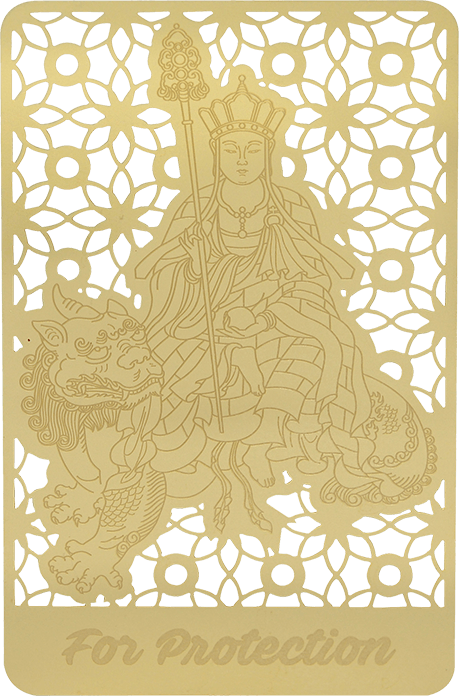
One of the most highly recommended protectors is Ksiddigarbha, the Bodhisattva who has vowed to help beings suffering in the lower realms. Wearing the image of Ksiddigarbha as a pendant or carrying the Ksiddigarbha on Chi Lin Gold Card offers powerful spiritual protection while invoking his blessings for both the living and the departed.
 The Chung Kwai Talisman, depicting the legendary Taoist Ghost Catcher, is another highly regarded protector against negative spiritual influences. Other protective talismans, such as the 28 Hums Protection Wheel Keychain, are also excellent choices during Hungry Ghost Month.
A Time of Compassion and Remembrance
Hungry Ghost Month is often portrayed as a mysterious or even frightening time of year. Yet its deeper meaning is one of compassion rather than fear. It reminds us to honour our ancestors, remember those who have been forgotten, and perform acts of generosity that benefit both the living and the departed.
Hungry Ghost Month reminds us that life extends beyond the visible world. It encourages us to honour our ancestors, show compassion to wandering spirits and recognise the importance of accumulating merit through kindness and generosity. When observed with understanding and sincerity, it becomes not a month to fear, but one that deepens our appreciation of Chinese culture and the interconnectedness of all beings.
Frequently Asked Questions
When is Hungry Ghost Festival in 2026?
The Hungry Ghost Festival falls on 27 August 2026, the 15th day of the 7th lunar month.
When does Hungry Ghost Month begin and end?
Hungry Ghost Month begins on 13 August 2026 and ends on 10 September 2026.
Can you travel during Hungry Ghost Month?
Many Chinese families continue to travel as normal. However, some people prefer to avoid major life events such as moving house, getting married or starting a new business during this period, following traditional customs.
Is Hungry Ghost Month a Buddhist or Taoist festival?
Today’s Hungry Ghost Month traditions combine elements of Buddhism, Taoism and Chinese folk religion, including ancestor veneration, offerings to wandering spirits and prayers for the deceased.